
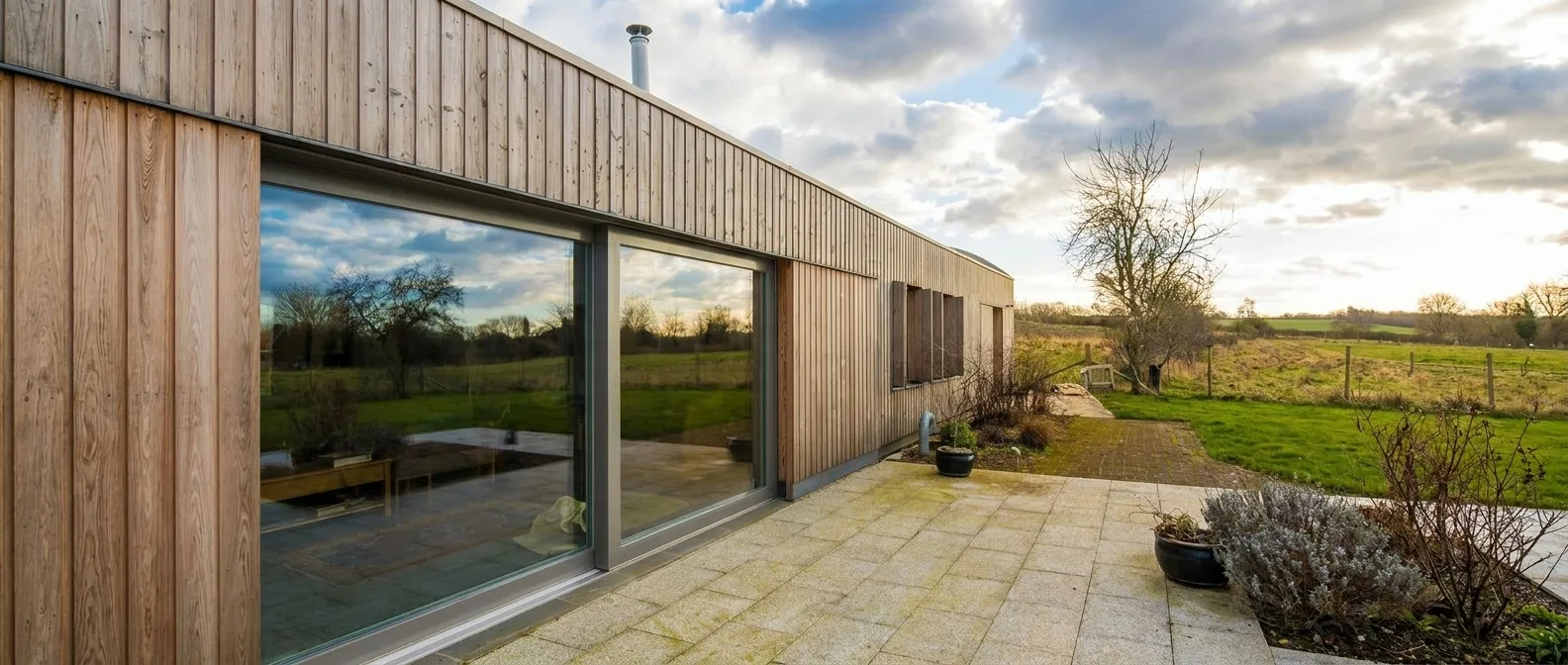
When a home isn't officially a home
Maybe you've lived in a caravan on your land for a decade. Maybe an annexe or converted outbuilding has been someone's full-time home for years. Maybe a house was split into flats long before you owned it, or has operated as an HMO for as long as anyone can remember.
It functions as a home, but its planning status remains uncertain. A residential CLEUD provides the legal certainty that what's already there is lawful.
Why that question mark costs you
Until a use is recognised as lawful, uncertainty can create real problems. Property sales can stall when a buyer's solicitor asks for proof. Mortgage lenders may refuse to lend. The property's value can be affected, and future plans put on hold.
In some cases, there may also be a risk of planning enforcement. Whatever the circumstances, unresolved planning status has a habit of surfacing at the worst possible moment — usually when you're trying to sell, refinance or move forward.
Our residential CLEUD service
A residential CLEUD confirms that an established residential use is lawful, giving you the legal certainty that your home is recognised in planning terms. Typical applications include:
Caravans & mobile homes
Used as a sole or main residence.
Annexes
Occupied as independent dwellings.
Converted outbuildings
Used as homes.
Houses converted into flats
Split into separate dwellings over time.
HMOs
Established through long-term use.
Other long-established uses
If your situation isn't listed, we can still help — talk to us.
The ten-year point — and what changed in 2024
Most residential uses of land, such as a caravan used as someone's main home, become immune from enforcement after ten years of continuous use.
Working out which rule applies isn't always straightforward. That's one of the first things we assess before preparing a CLEUD application.
The single ten-year rule
Since 25 April 2024, England operates a single ten-year rule, replacing the former four-year rule.
The transitional exception
Changes of use completed before that date may still benefit from transitional arrangements — so the previous four-year rule can still apply in some cases.
How we build your residential case
It starts with a free assessment — we review your situation and tell you honestly whether you have grounds. From there, a successful application is built on evidence.
Free assessment
We review your situation and tell you honestly whether you have grounds.
Build the timeline
We map the history of the use across the relevant immunity period.
Gather evidence
We source documents and testimony that corroborate the timeline.
Submit & secure
We prepare, submit and manage the application through to decision.
We manage the entire process on your behalf.
Get my free assessmentYour questions, answered
Can I get a Certificate of Lawfulness for a caravan I live in?
Often, yes. If the caravan has been used as your sole or main residence continuously for the relevant immunity period, and you can provide sufficient evidence of that occupation, a residential CLEUD may be available.
My house was split into flats before I bought it. Can that be made lawful?
Often, yes. If the flats have existed and been occupied for the relevant immunity period, a CLEUD can confirm that use is lawful, even if the conversion took place before you owned the property.
Can I apply if I wasn't the person who started the use?
Yes. A CLEUD relates to the use of the land or building, not the person who carried it out. Previous owners' occupation and evidence can often be relied upon to establish lawfulness.
Not sure if you qualify?
Answer a few simple questions about your property and its history, and we'll give you a clear, honest assessment of where you stand.
Get my free assessment