
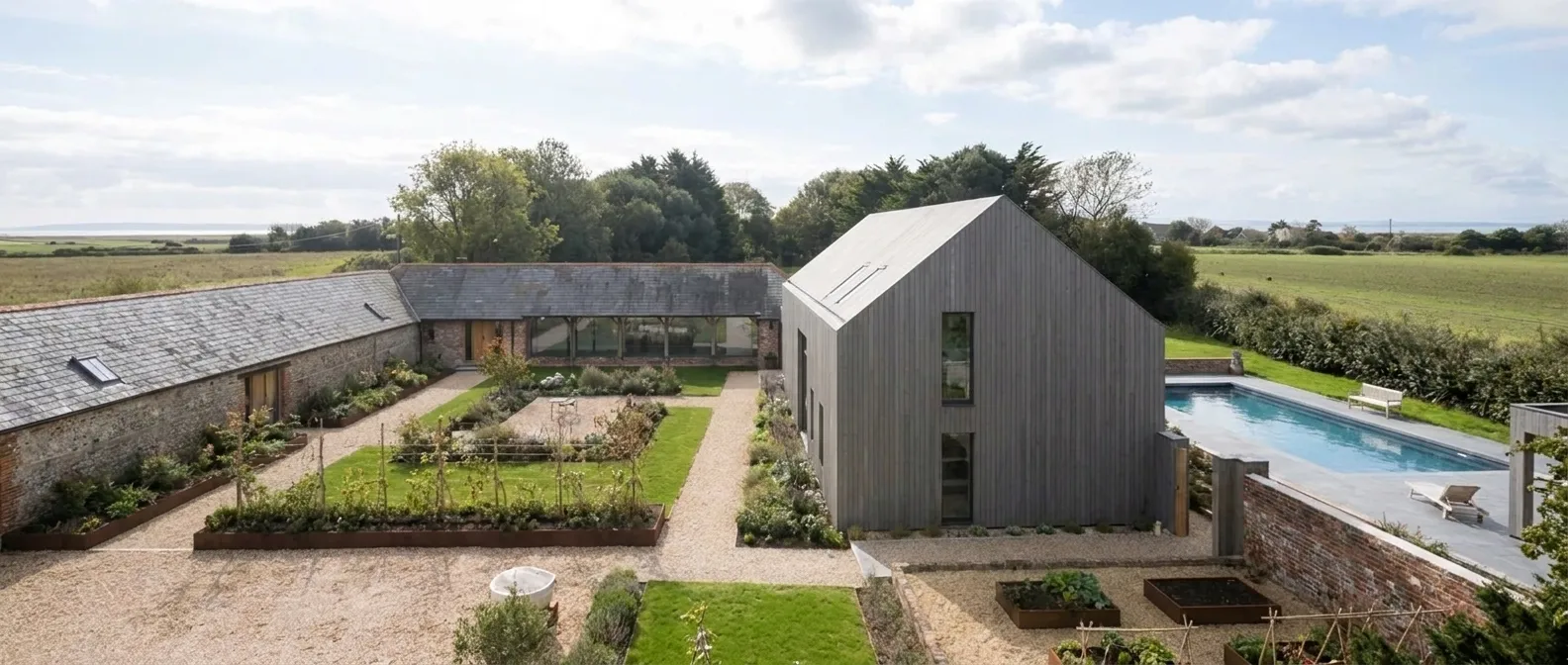
The rural planning puzzle
Barns drift from agricultural use into storage, workshops or light industrial uses. Grazing land acquires stables and an all-weather arena. A farmhouse or mobile home is occupied in breach of an agricultural occupancy condition (an "ag tie").
Over time, these uses may become lawful through planning immunity — but only if the history can be properly evidenced.
Why it matters
Rural buyers and lenders are cautious. An agricultural occupancy condition can significantly reduce the value of a farmhouse. A barn that can't demonstrate its lawful use may be harder to sell, let or finance.
Uncertainty over planning status can affect transactions, lending and future opportunities. A CLEUD provides the legal certainty that turns a long-established use into a secure asset.
Our agricultural & equestrian CLEUD service
A CLEUD confirms that an established use is lawful, giving you the legal certainty needed to protect the value and future of your holding. Typical applications include:
Barns in non-agricultural use
Storage, workshops and light industrial uses established over time.
Agricultural buildings
Used for alternative commercial purposes.
Stables & ménages
Equestrian facilities established without planning permission.
Ag-tie farmhouses
Occupied in breach of an agricultural occupancy condition.
Agricultural workers' dwellings
With long-established occupancy.
Mixed uses of land
Mixed agricultural and commercial uses — talk to us about yours.
The ten-year point for rural uses
Most rural breaches of planning control — an unauthorised use, a barn's change of use, or occupation in breach of an agricultural occupancy condition — become immune from enforcement after ten years of continuous, evidenced use.
Working out which rule applies, and proving the full period, isn't always straightforward. That's one of the first things we assess before preparing a CLEUD application.
The single ten-year rule
Since 25 April 2024, England operates a single ten-year rule for most breaches, including changes of use and conditions.
Breach of an ag tie
Occupation in breach of an agricultural occupancy condition can become lawful after ten years of continuous breach — one of the most valuable rural CLEUDs.
How we build your rural case
It starts with a free assessment — we review the history, assess the evidence and identify the legal basis for a CLEUD, giving you a clear view of your options before any work begins.
Free assessment
We review the history and tell you honestly where you stand.
Evidence & timeline
We map the use across the immunity period and source the proof.
Prepare & submit
We build the application and supporting drawings.
Secure certainty
We manage the case through to a decision on your behalf.
We manage the entire process on your behalf.
Get my free assessmentYour questions, answered
Can an agricultural occupancy condition be removed?
Where an agricultural occupancy condition has been breached continuously for the relevant immunity period — for example, where a dwelling has been occupied by someone with no agricultural connection — a CLEUD may be able to confirm that the breach is lawful and immune from enforcement. The key is evidence: proving who lived there, when they lived there and how the property was occupied is often the deciding factor.
We've used a field for horses for years. Is that lawful?
Grazing horses can be an agricultural use. Keeping, exercising and stabling horses is usually an equestrian use with different planning implications. If that equestrian use has continued for the relevant immunity period, and can be supported by sufficient evidence, a CLEUD may be able to confirm it is lawful.
Not sure if you qualify?
Answer a few simple questions about your property and its history, and we'll give you a clear, honest assessment of where you stand.
Get my free assessment